This post contains affiliate links. If you book or purchase through these links, I may earn a small commission at no extra cost to you. This helps support my work and allows me to keep creating detailed travel guides.
I had been looking at photos of Uzbekistan for years before I finally went. The blue tiles. The Registan. The kind of symmetry that looks almost too perfect to be real. I thought I knew what I was walking into.
I was right about most of it. But I was wrong about how it would feel.
The cities are as beautiful as the photos suggest, and while there are certainly tourist groups around the main sights, it never feels overwhelmingly crowded the way other popular destinations do. There is still real space to breathe, to stand somewhere extraordinary without being shoulder to shoulder with strangers, and to have moments that actually feel personal rather than managed. That is the thing about Uzbekistan that no photo manages to capture.
My route took me from Tashkent across to Khiva, then to Bukhara, and finally to Samarkand, with a detour to the Aral Sea in between. I used flights for the longer legs and trains between Bukhara, Samarkand, and back to Tashkent. Without that combination, the distances would have felt exhausting.
In This Guide
My Uzbekistan Trip Route
Tashkent
Most people treat Tashkent as a layover city on the way to the Silk Road stops. I had one full day to explore it and found it genuinely worth the time, even if it does not compete with what comes later.
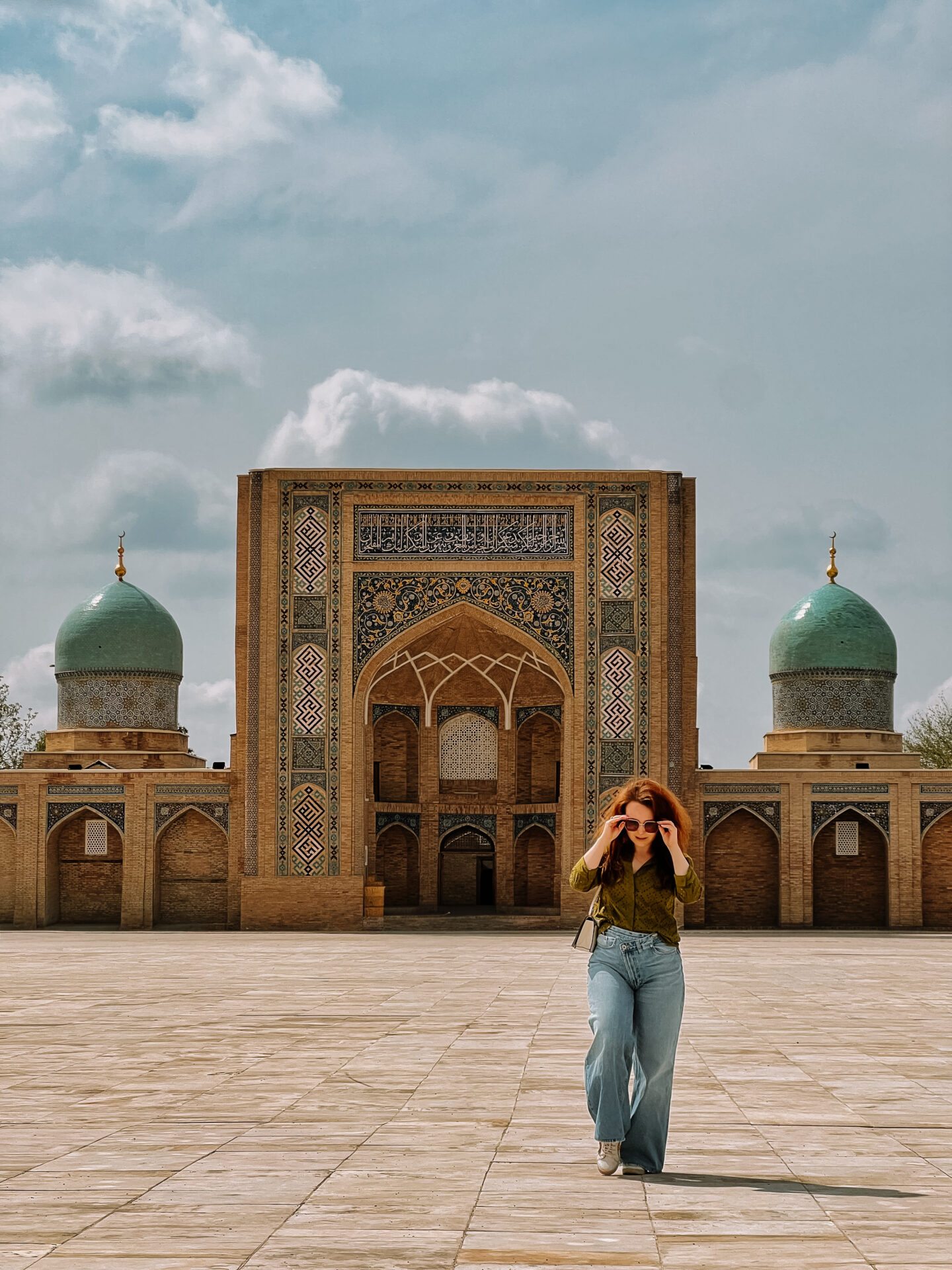
The Khast Imam Complex was where my trip really began for me emotionally. It was the first place I stood in front of architecture that made me stop walking. The scale, the symmetry, the calm of the courtyard. It gave me a sense of what the next two weeks would feel like before I had even left the capital.
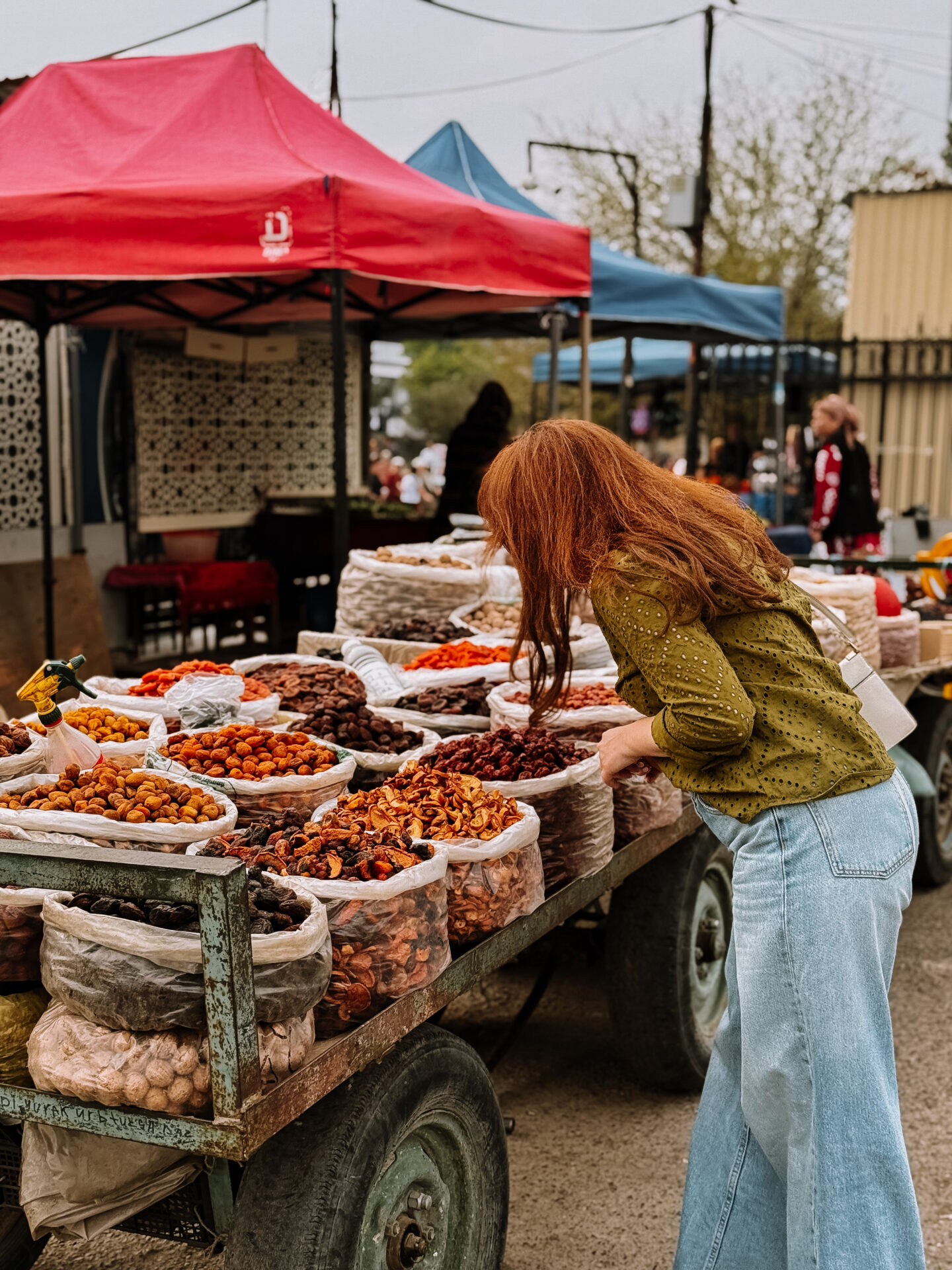
Chorsu Bazaar is the best contrast to the monuments because it is completely unfiltered. Loud, dense, full of people buying ordinary things, it reminded me that this is a real city and not a heritage project. Amir Timur Square gives you a central reference point for the city and is worth a short stop.
Tips for Tashkent:
The metro stations are worth visiting as architecture in their own right. Many were built during the Soviet era and are genuinely ornate. Try the non bread from any bakery you pass. It comes out of a tandoor oven and is one of those things you end up eating every day for the rest of the trip. Tashkent is also the best place in the country to exchange money and stock up on cash before heading west.
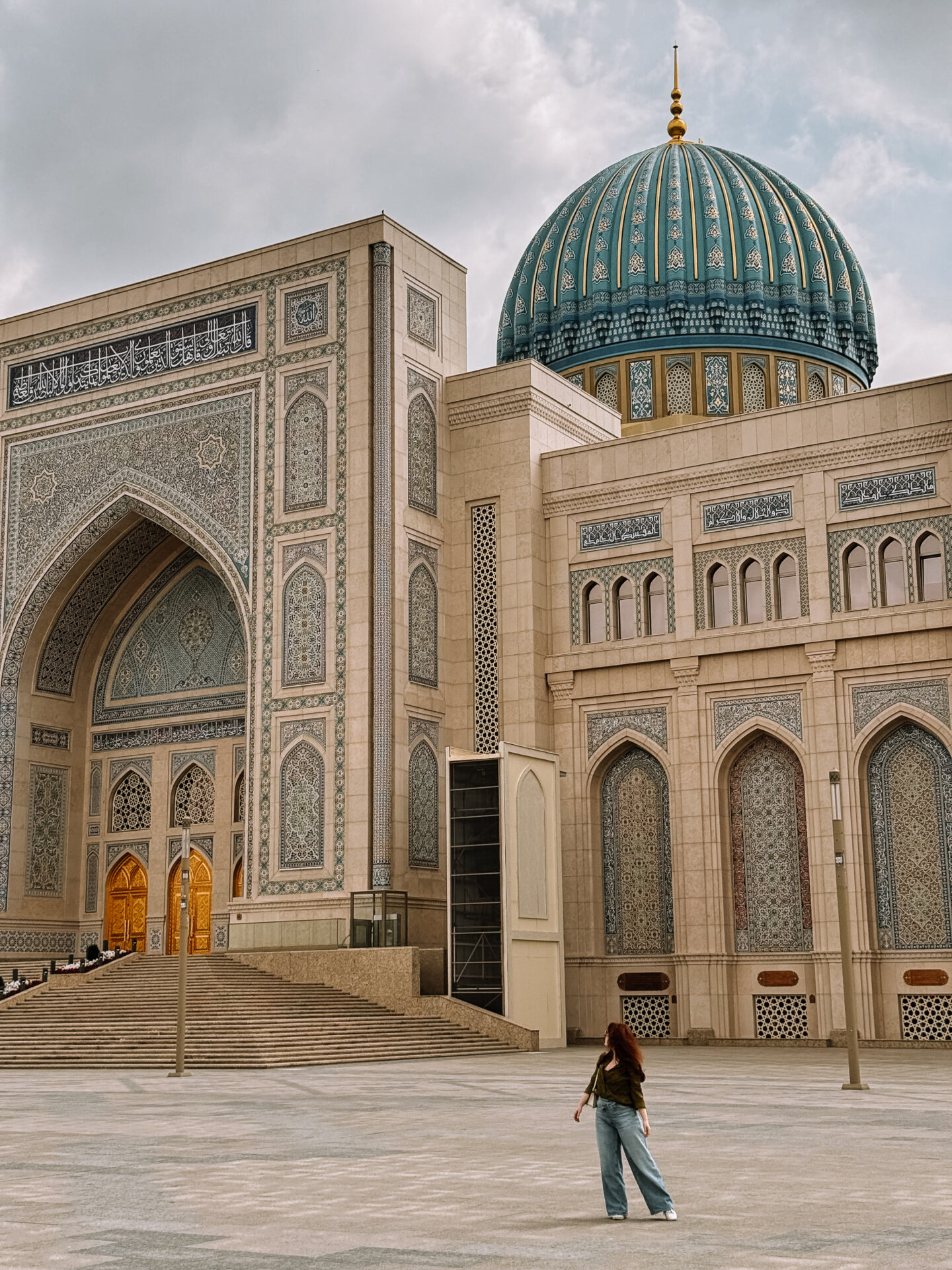
The Minor Mosque is also on most itineraries. I did not visit myself but it consistently gets mentioned for its striking white marble and blue detailing, so it is worth adding if you have time.
For food in Tashkent, the Plov Center is a Tashkent institution. Large, no-frills, and full of locals, it is the right place to try the Tashkent version of plov before you start comparing it with every other city. Afsona is a good option for a more relaxed dinner, modern Uzbek cuisine in a comfortable setting that works well for both locals and visitors.
Khiva
Khiva was the biggest surprise of the entire trip. Many people skip it because of the distance and the effort it takes to get there. That is a mistake, and most people I spoke to who had been said the same thing.
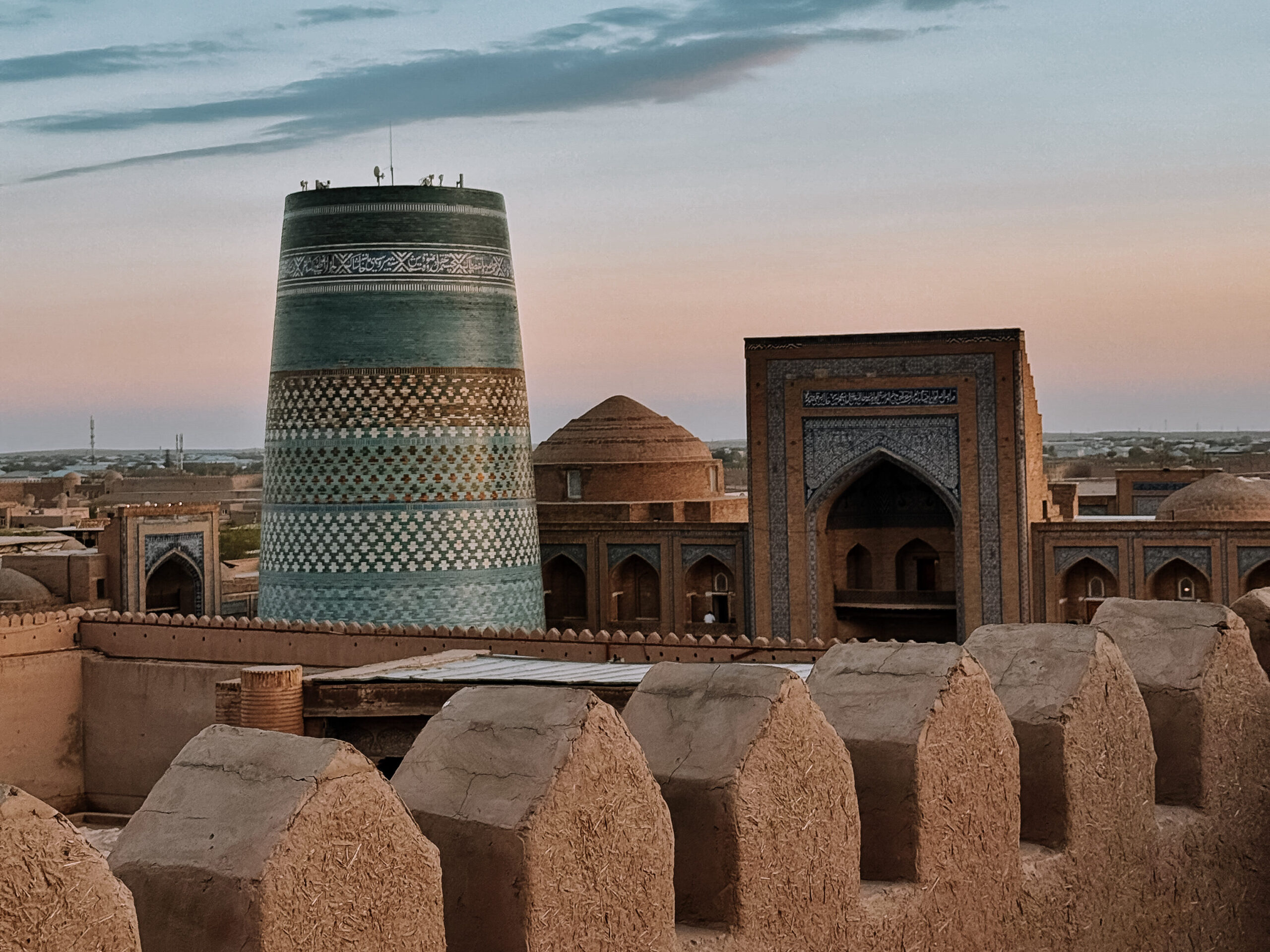
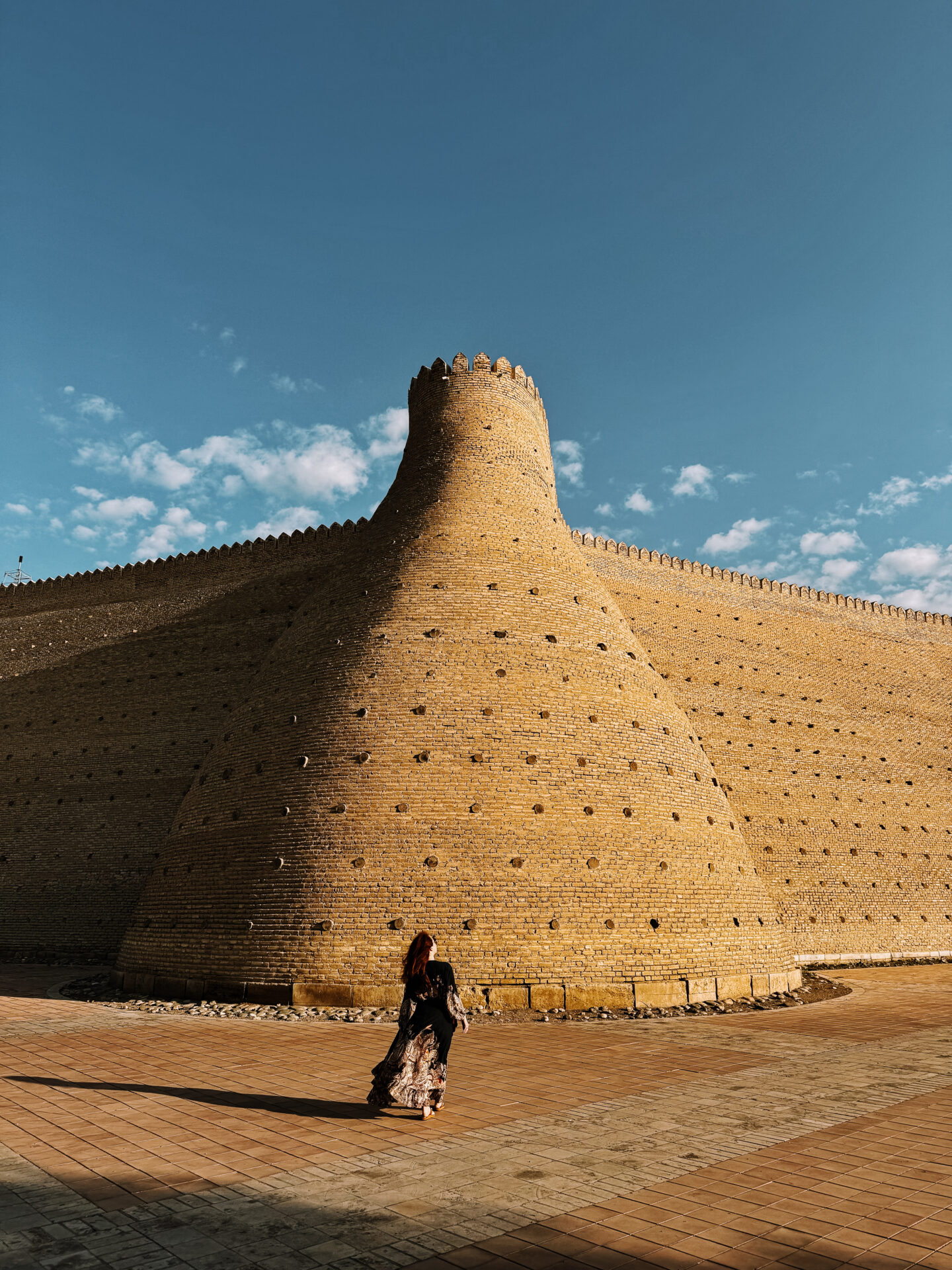
The old city, known as Itchan Kala, is completely enclosed by mud brick walls and once you pass through the gate, the modern world disappears. No cars inside. No visual noise. Just old lanes, tilework, minarets, and courtyards. It is the most intact medieval Islamic city I have walked through.
During the day it does feel slightly like an open air museum, and in a sense it is. There are tickets required for the main monuments, sold at the west gate and valid for two days. If you are staying at accommodation inside the walls you do not need to pay the entry ticket, which is one of many good reasons to book a room inside rather than outside. Either way the lanes are free to walk at any hour.
Early in the morning, before the tour groups start, you can have entire sections of the city to yourself. The light at that hour on the tilework is something I think about often.
The nights were just as good but for entirely different reasons. The whole city is lit up after dark, every minaret and facade glowing in warm amber light, and the streets empty out almost completely. I walked for two hours on my first evening and barely saw another person.
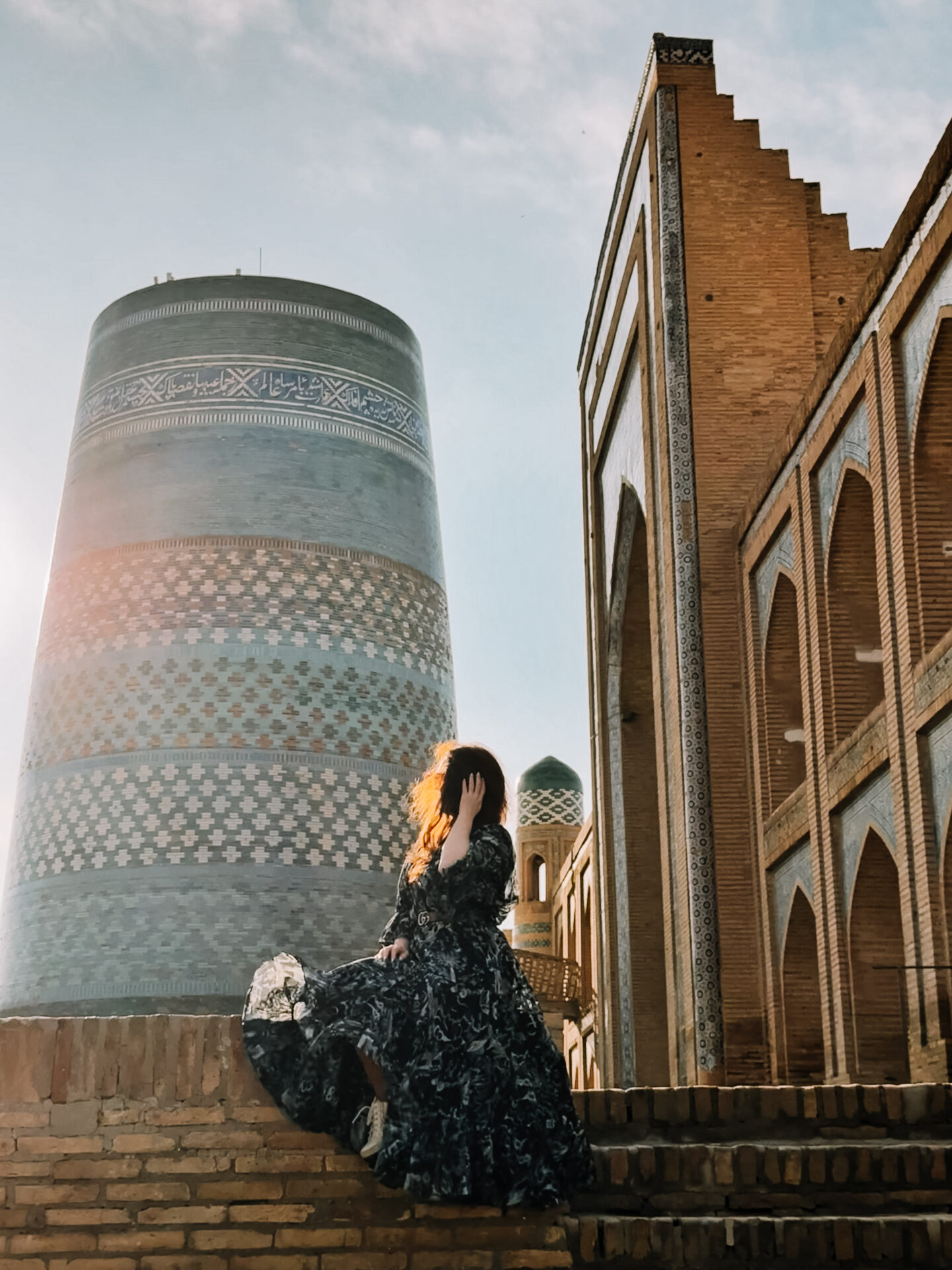
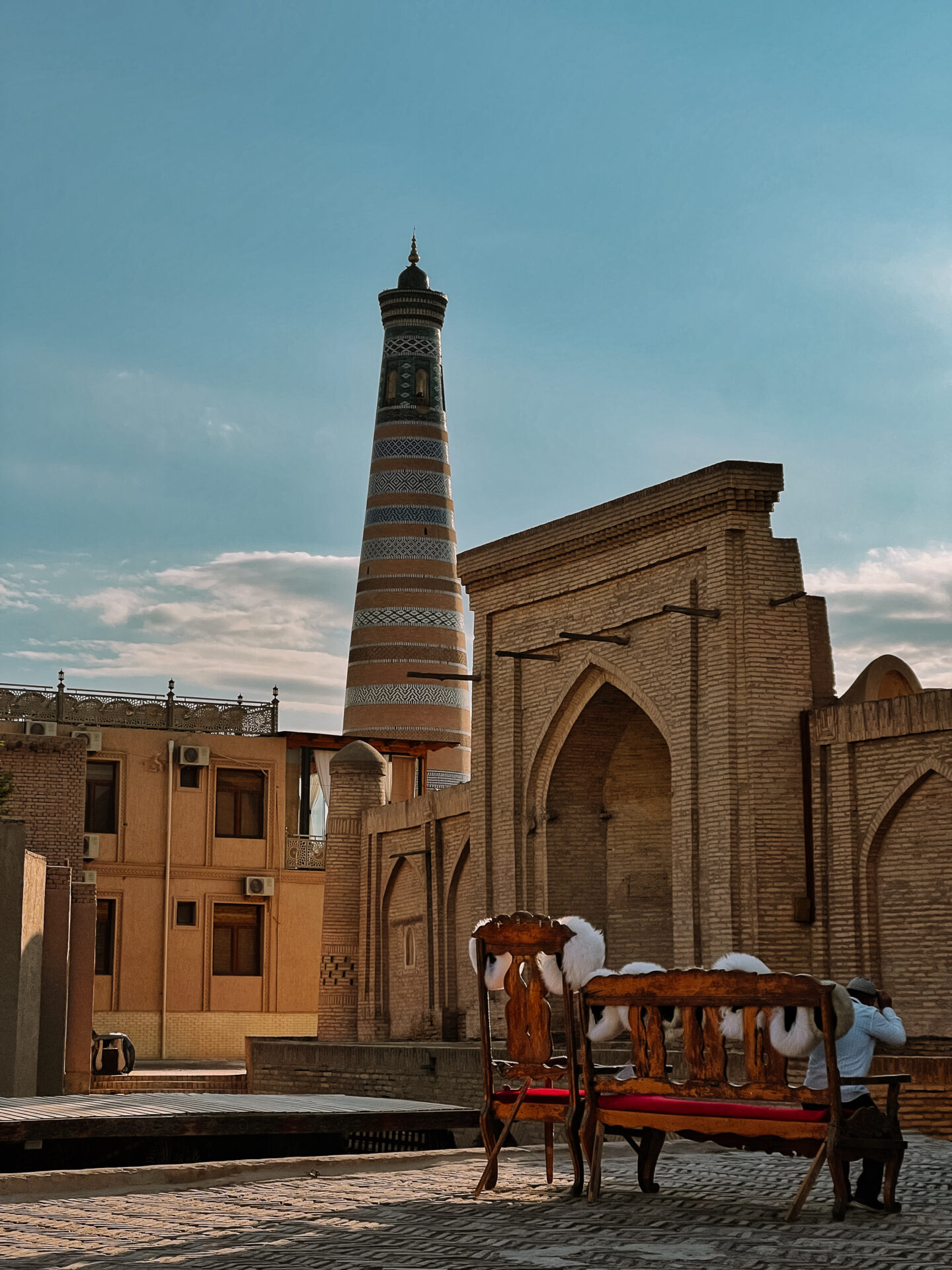
The Kalta Minor Minaret is the most distinctive thing in the skyline, wide at the base but cut short and covered entirely in turquoise and white tile because it was never completed. The Juma Mosque is quieter and harder to photograph but more affecting, with its carved wooden columns and narrow slanted light.
Tips for Khiva:
Stay inside the walls. Accommodation inside Itchan Kala is limited but it exists, and waking up there rather than outside changes everything about the early morning experience. Buy the combination ticket at the west gate if you are not staying inside. Bring water and wear comfortable shoes because the ground is uneven. The best time to visit the rooftops and city walls is just before sunset.
For food in Khiva, The Terrace is a well-regarded spot inside the walls with good views and solid Uzbek cooking. Cafe Zarafshon is another good option worth knowing about. Tandoriy is worth seeking out specifically because the menu goes beyond the standard grilled meat and flatbread. They serve traditional dishes that are harder to find elsewhere, the kind of things that do not always make it onto tourist-facing menus, which makes it one of the more interesting places to eat in the city.
The Aral Sea
I want to be honest about what visiting the Aral Sea actually involves, because most travel content describes it in a way that makes it sound manageable. It is not a day trip in any comfortable sense of the phrase.
From Khiva it is around six hours by car to reach Muynak, the town that used to sit on the southern shore of the sea. The drive is flat and monotonous for most of the way, which is part of the experience even if it does not feel like it at the time.
Muynak used to be a fishing port. The sea was here. Then it was not. In the 1950s and 60s, Soviet irrigation projects diverted the Amu Darya and Syr Darya rivers that fed the Aral Sea in order to support large-scale cotton farming across Central Asia. The water that had sustained one of the largest inland seas in the world was redirected, and the sea began to shrink. By the 1980s the fishing industry had collapsed. By the 2000s the sea had lost around three quarters of its volume and the town of Muynak was over 100 kilometres from the water. The salt and chemicals left behind on the former seabed created one of the most contaminated landscapes in the world, with severe health consequences for the people who remained.
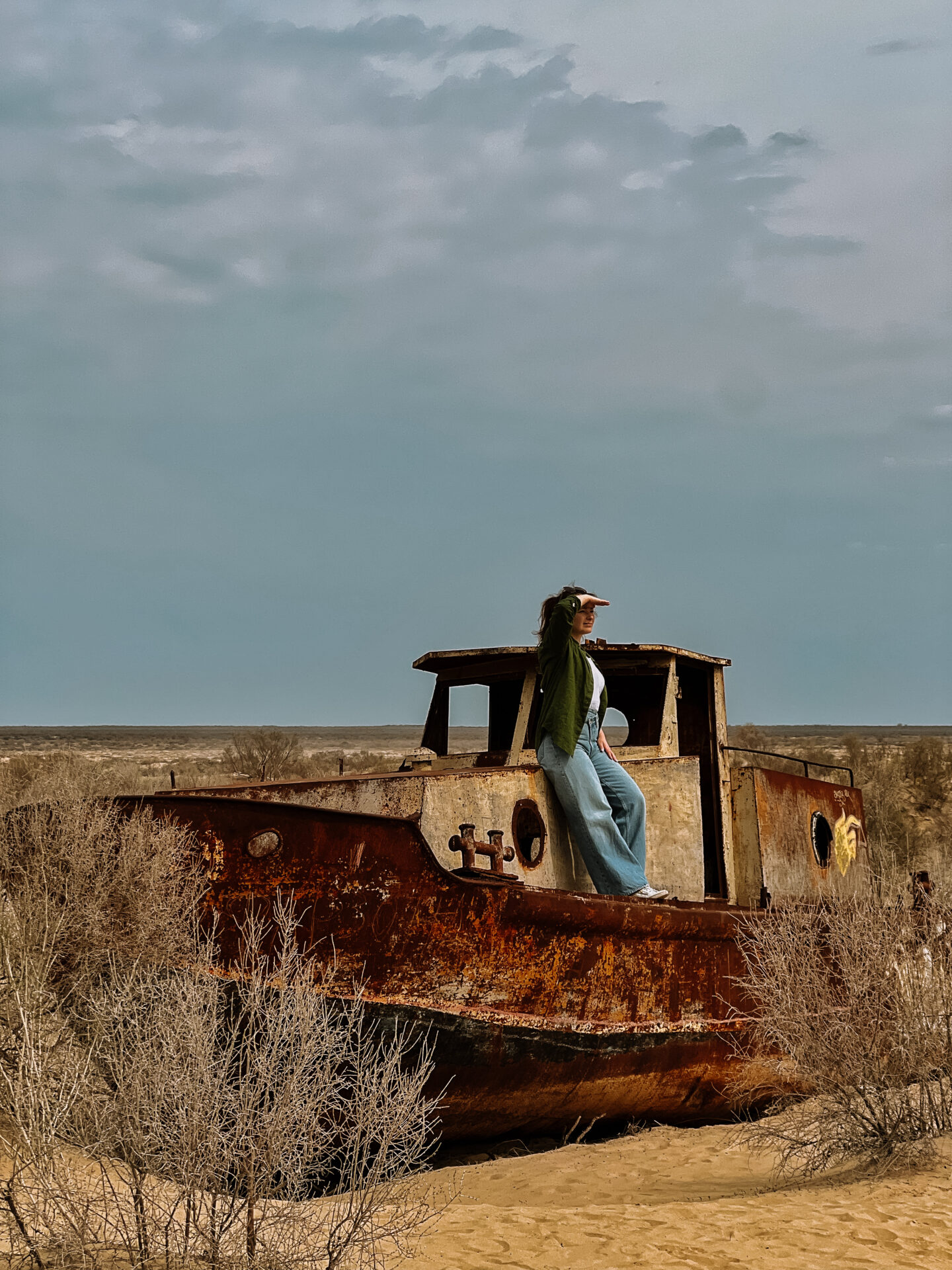
The ship cemetery outside town is where rusted hulls of old fishing boats sit stranded in the sand, gathered together in one spot to make them accessible for visitors. You can climb inside some of them. Next to the cemetery there is a small local museum with photographs and paintings of the town in its more prosperous days, plus a short documentary film that gives useful context. There is also a memorial overlooking the site with a brief historical summary.
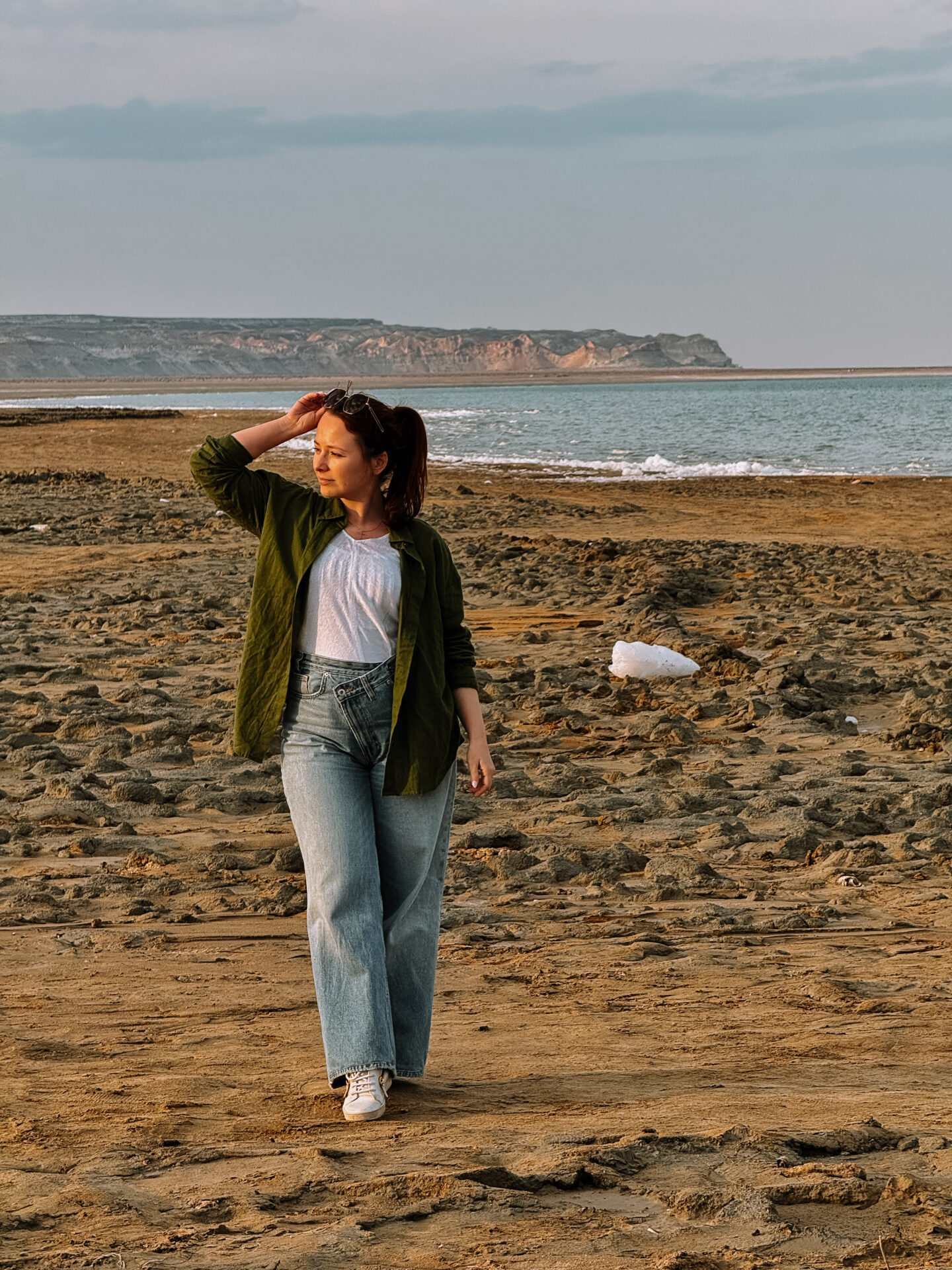
After Muynak the road ends and you switch to a 4×4. From there it is another four to five hours of driving across the former seabed to reach what remains of the sea itself. The ground is flat, cracked, and white from salt deposits. In some places there are no tracks at all, just open land. It stops feeling like travel and starts feeling like moving through the aftermath of something.
The sea still exists in a reduced form. Staying overnight in a yurt camp near the water gives you time to absorb where you are before the drive back. It is not comfortable. But it reframes everything else on the trip.
Tips for the Aral Sea:
Book through an agency in Khiva rather than trying to arrange a driver independently. The agencies know the road conditions, have appropriate vehicles, and handle the yurt camp logistics. Bring more water than you think you need, snacks, a warm layer for the evening, and a powerbank. There is no phone signal for most of the journey. The experience is physically demanding and emotionally heavy. Go with that expectation and it will be one of the most significant things you do in Central Asia.
Bukhara
Bukhara felt different from Khiva in a way I did not fully expect. Khiva is preserved. Bukhara is lived in. People have their homes and shops and daily routines woven directly through the historic centre, and that makes the city feel more layered and less like a museum.
I spent most of my time around the Lyabi Hauz area, which is a central pond surrounded by old mulberry trees and restaurants with people sitting around doing very little. In the evenings it becomes the social centre of the city. Locals gather there long after the tour groups have gone back to their hotels, and the atmosphere is easy and unhurried. I would not skip those restaurants for somewhere further away. Come a little before the peak dinner hour, stay longer than you planned, and you get exactly the right experience.
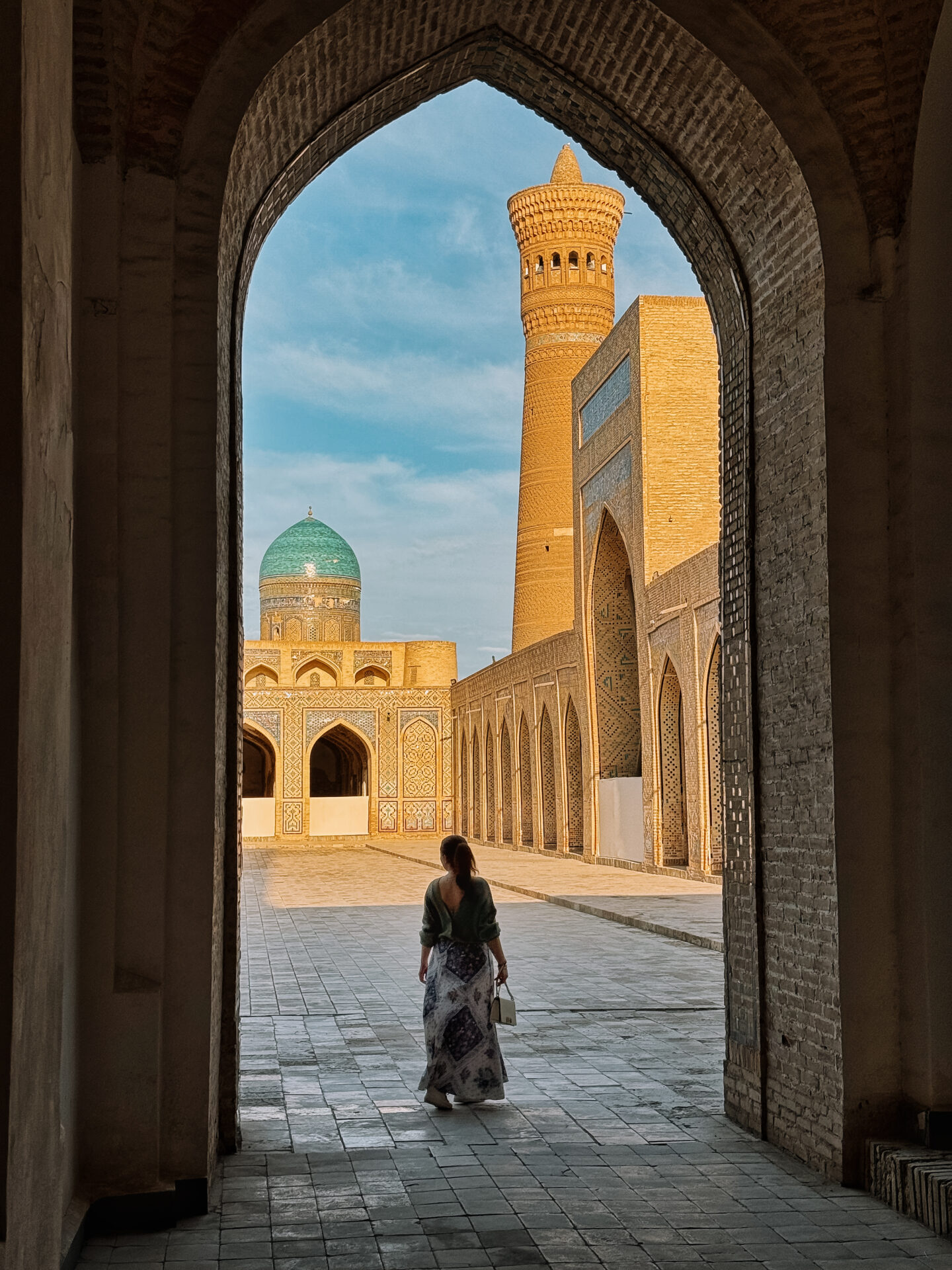
The Poi Kalon complex is the architectural centrepiece, with the Kalon Minaret, the mosque, and the Mir-i-Arab Madrassa all facing each other across a courtyard. The surrounding streets held my attention just as much. Bukhara has a network of covered bazaars and old caravanserais that give a clearer sense of what the city was like as a Silk Road trading hub.
One day is enough to cover the main sights. A second day is a good option if you want a slower pace, but it is not necessary.
Tips for Bukhara:
Hire a local guide for half a day if you want context. The history of Bukhara as a major centre of Islamic scholarship is genuinely interesting and hard to fully appreciate just from walking around. For food, the Cafe inside the Kalon Pavilion is a lovely spot for drinks, sweets, and the view over the Poi Kalon complex. Ayvan is worth knowing about as well, a well-regarded restaurant in the old town with good Uzbek cooking and a courtyard setting. For accommodation, Komil Boutique Hotel is consistently one of the most recommended places to stay in the city, a restored traditional house with a beautiful courtyard. For Afsona lovers, there is also a Bukhara branch of the Tashkent original.
Samarkand
Samarkand is the real-life Arabian Nights. This is the place that actually feels as dramatic as it looks in photos.
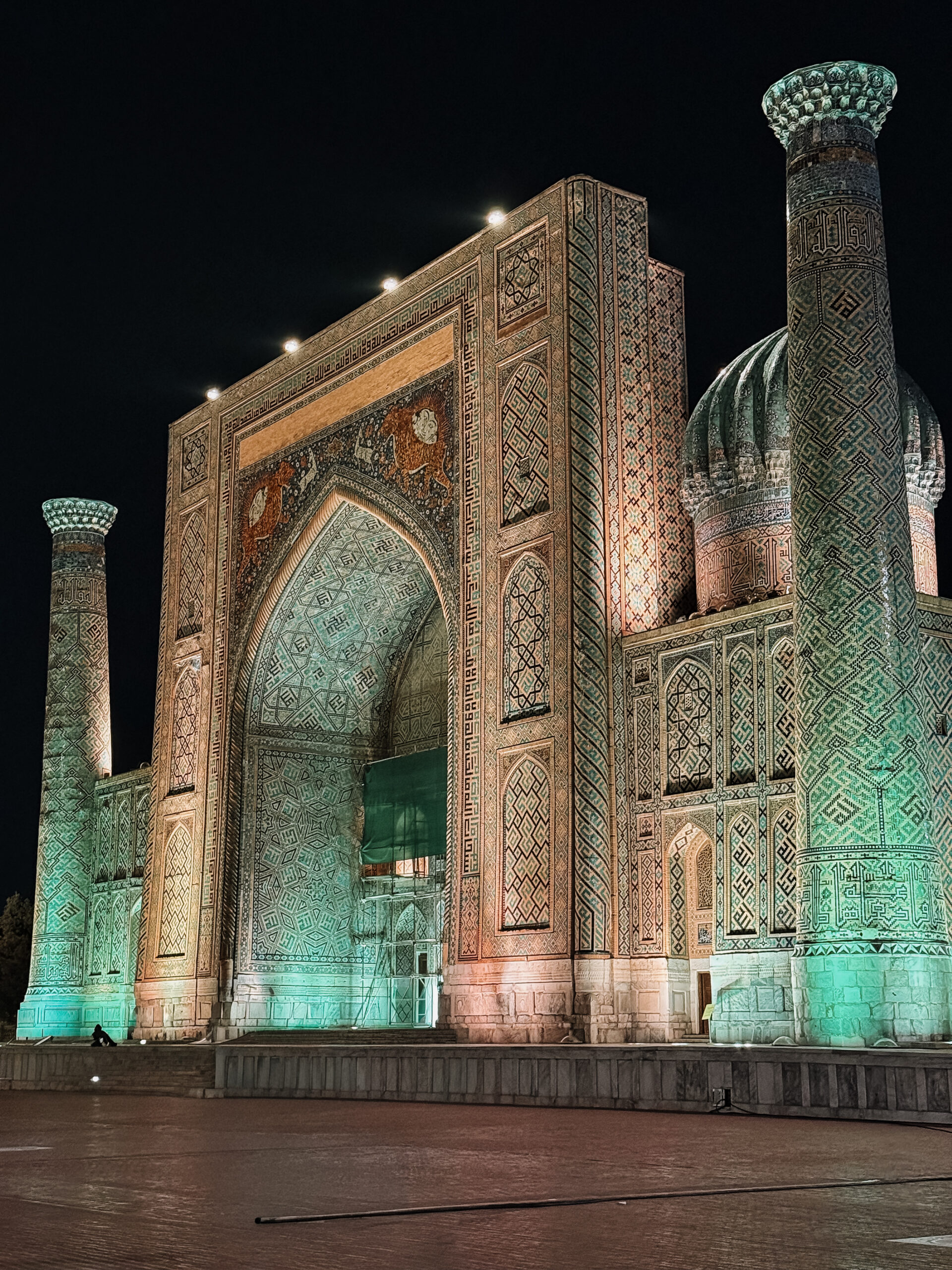
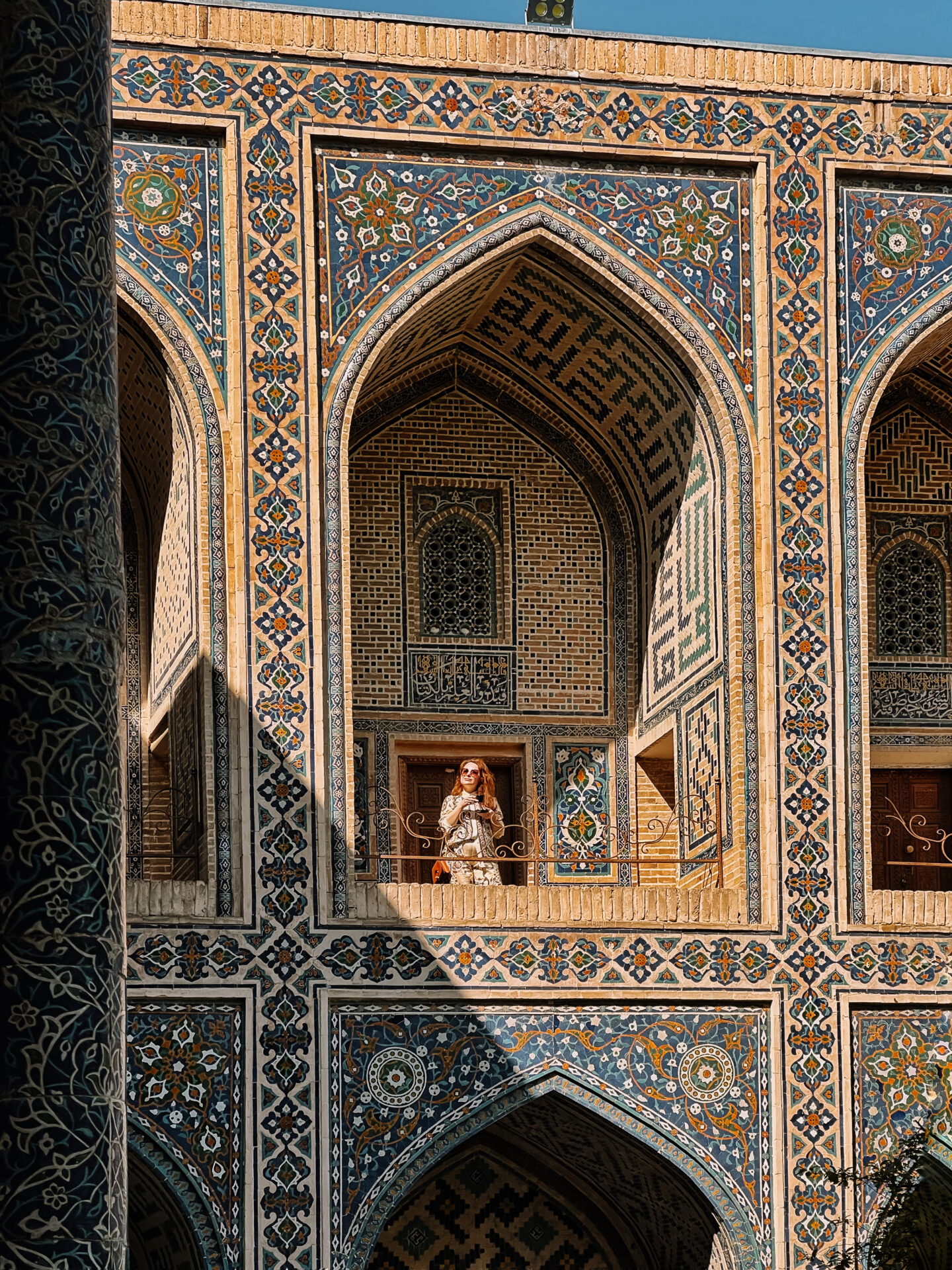
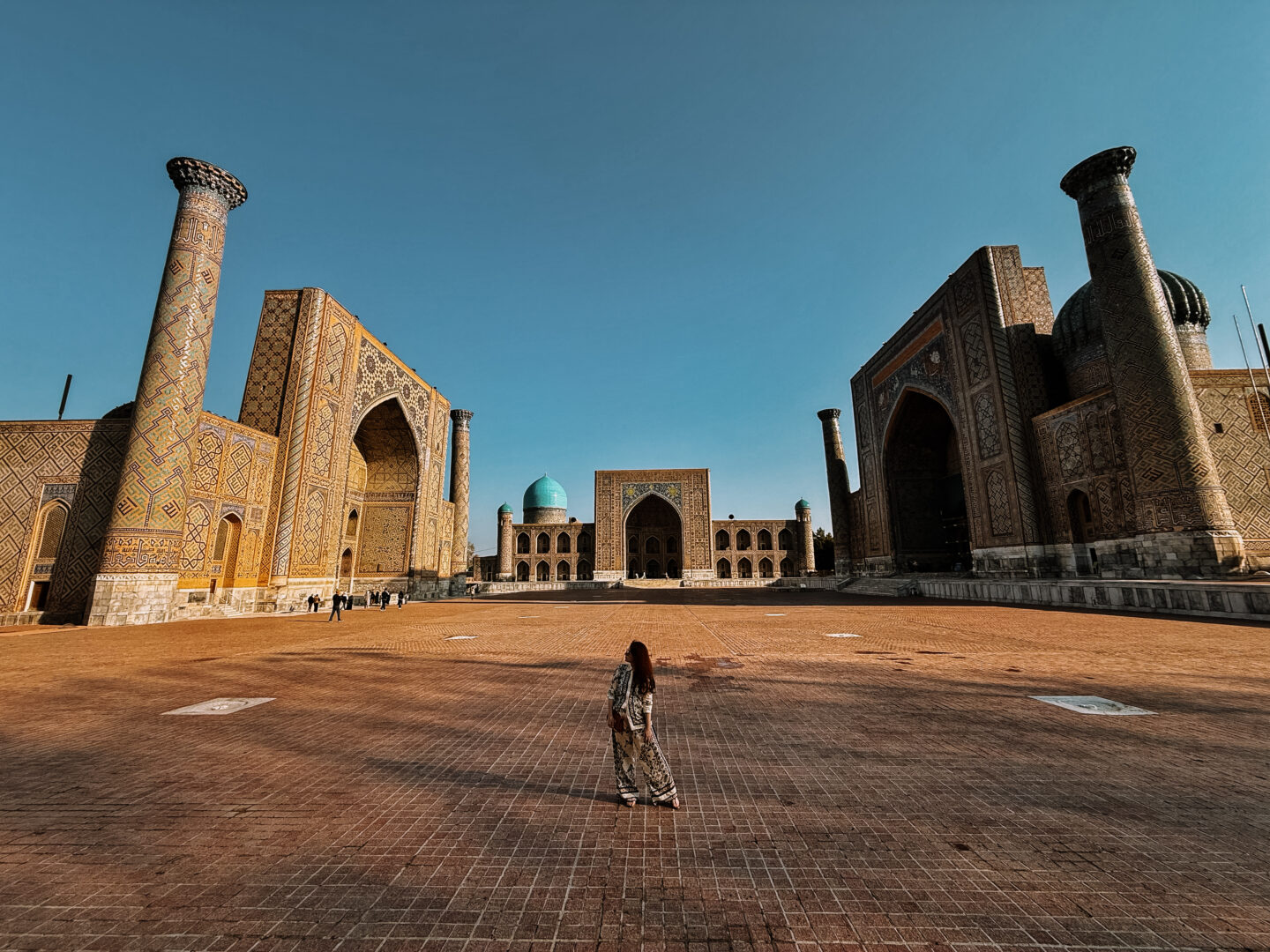
The Registan is the center of everything, and yes, it lives up to it. The scale, the symmetry, the details. Everything designed to impress. I went at opening time, around 8 in the morning, and then again for the light show in the evening, and the two experiences could not have been more different. At opening you can actually take it in with relatively few people around and the morning light on the blue tiles is extraordinary. At night the show takes over, it is theatrical and very Uzbek-language-only, but genuinely impressive visually and worth staying for.
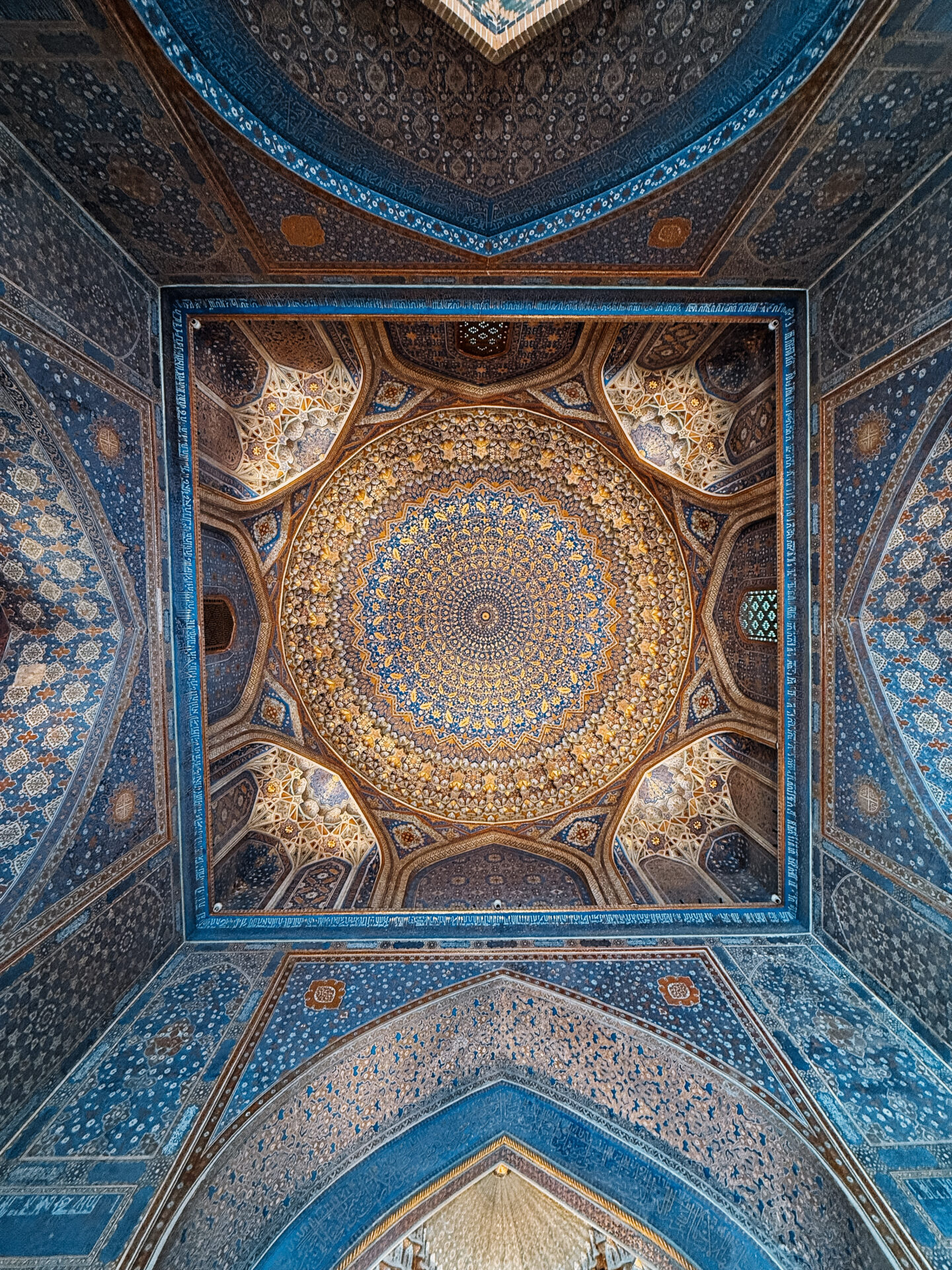
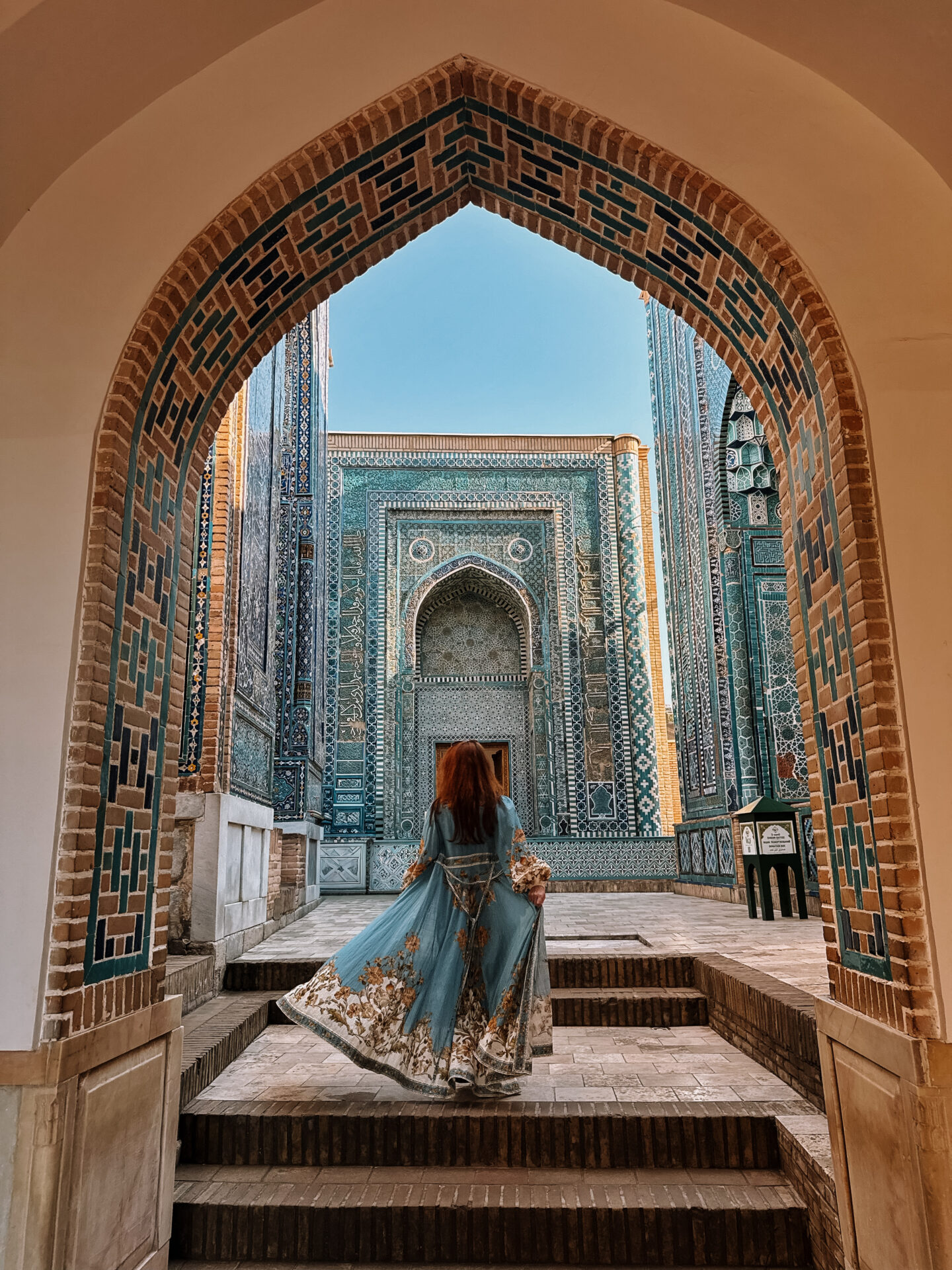
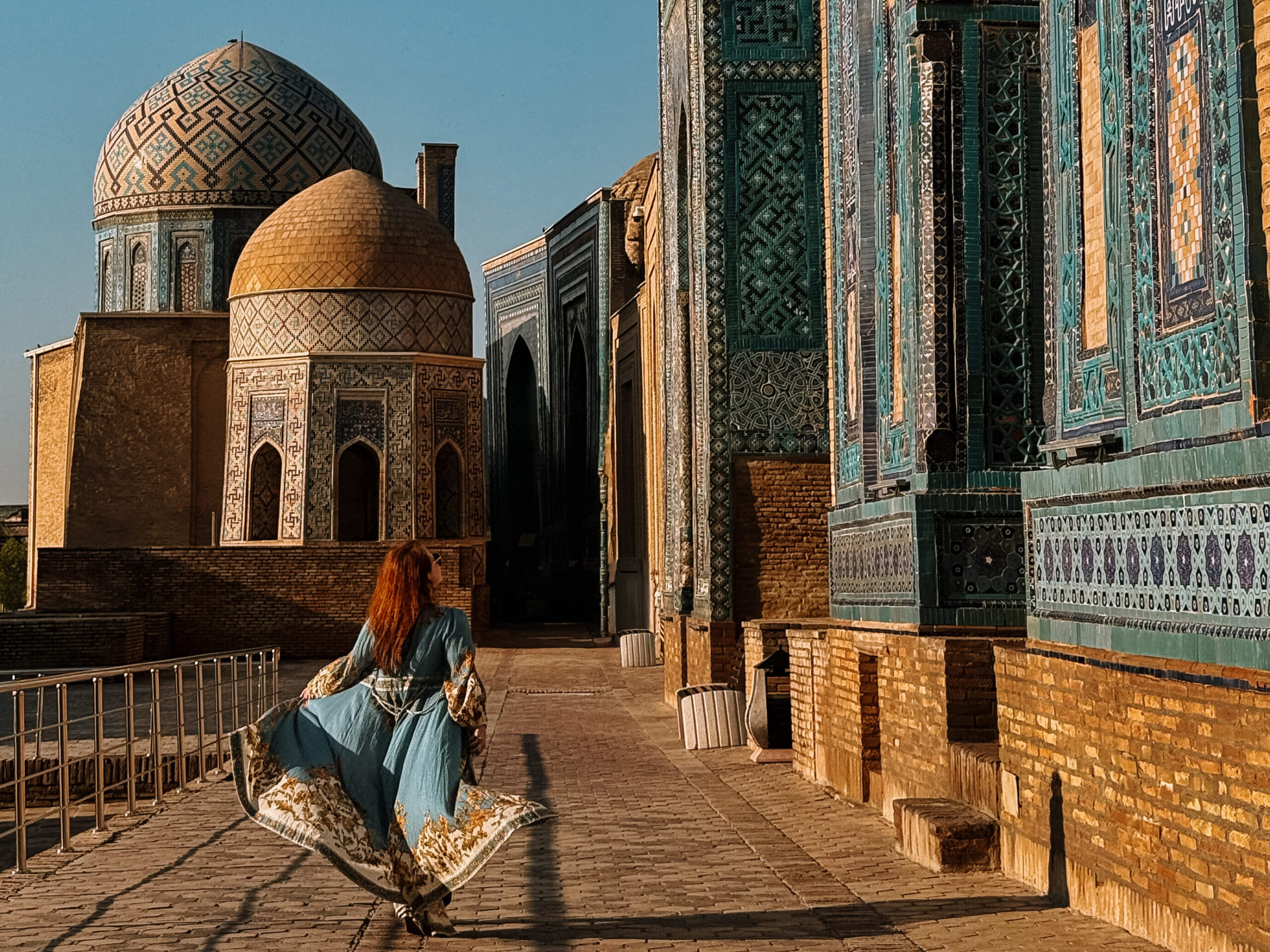
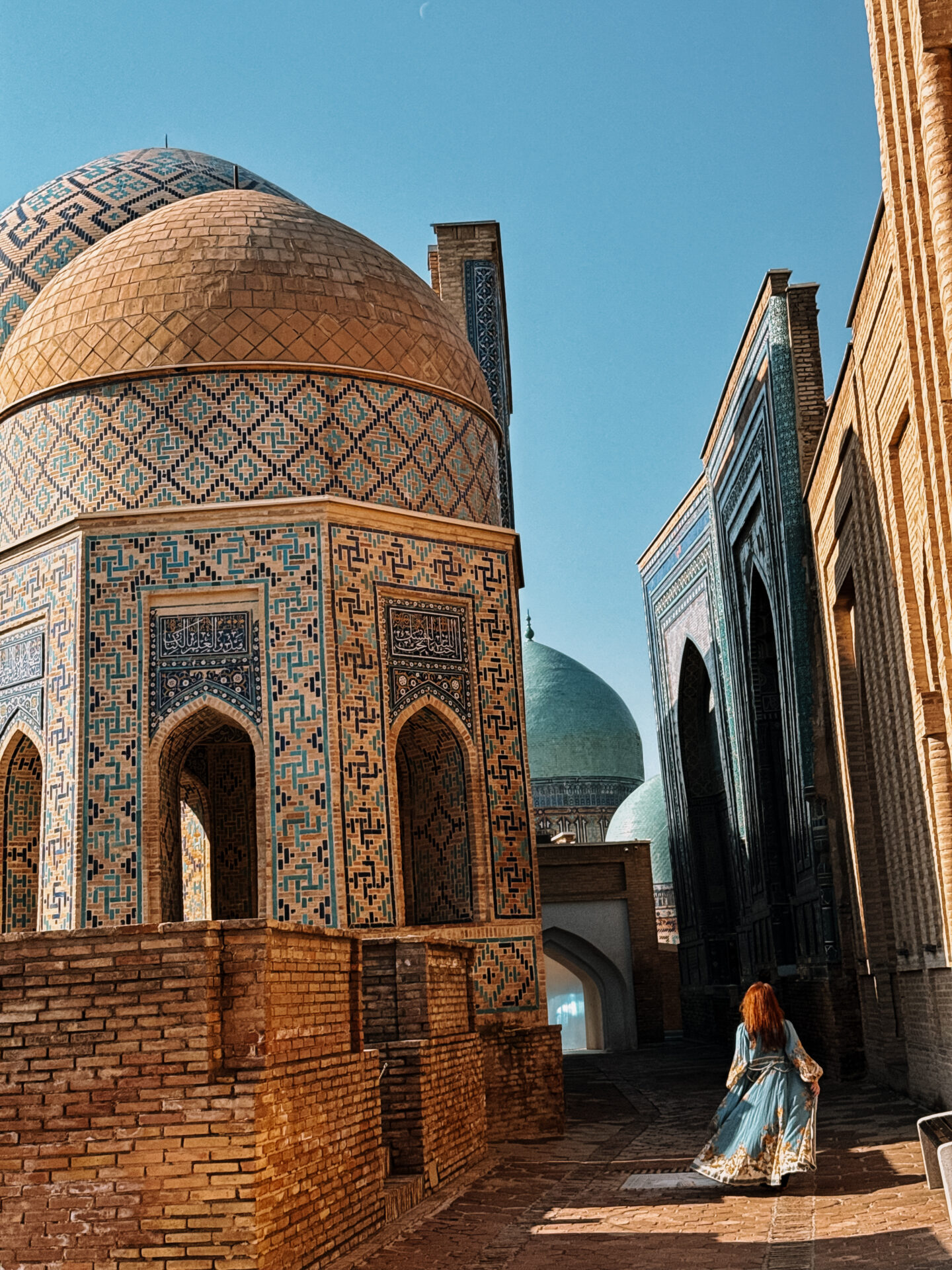
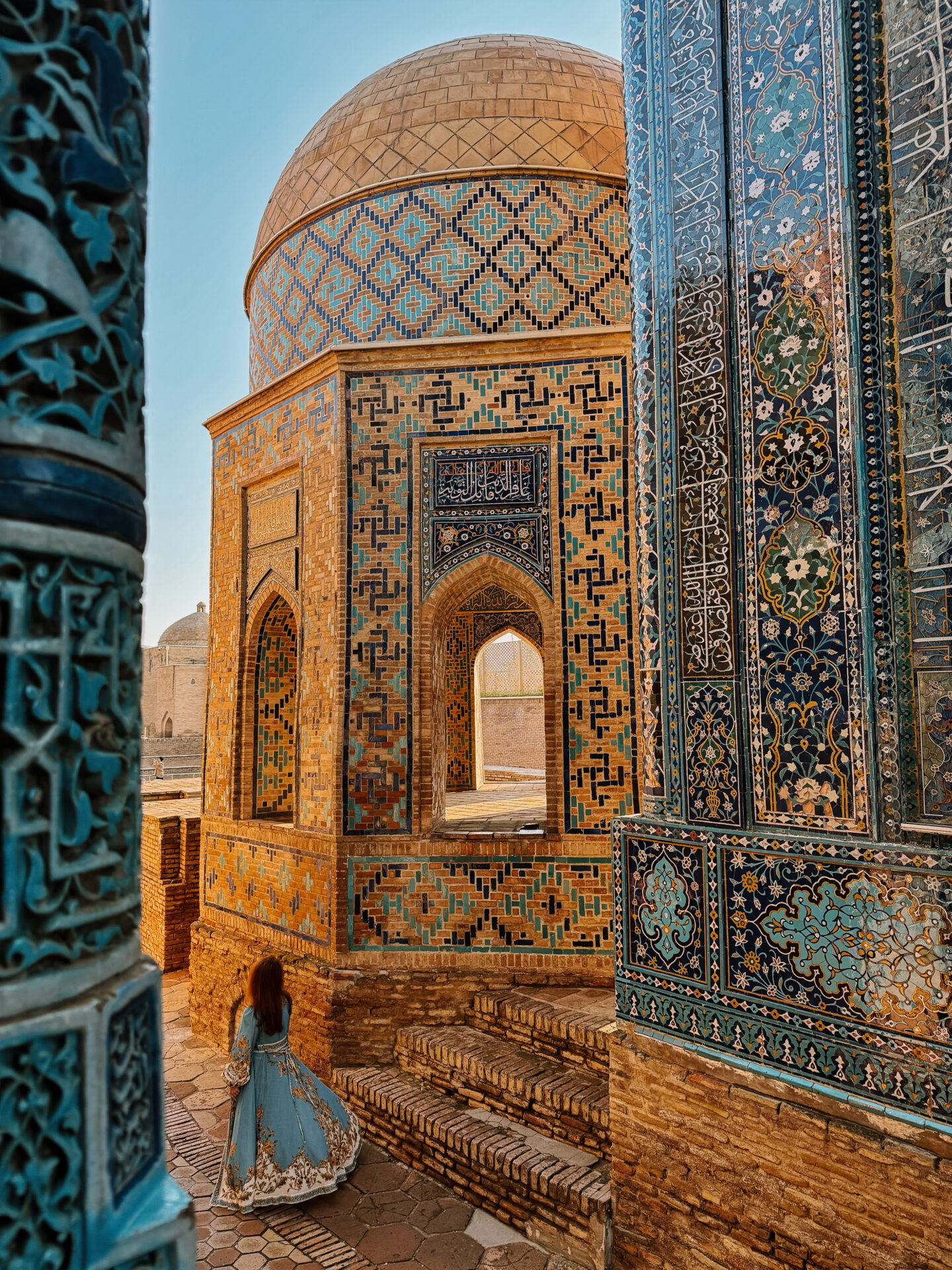
Shah-i-Zinda felt more intense. Walking through that narrow corridor of mausoleums with blue tiles pressing in from both sides is one of the most visually striking experiences on the entire trip. Go at opening time for the same reason as the Registan.
The Gur-e-Amir Mausoleum, where Timur is buried, is worth a visit. I only saw it from the outside, but from everything I read and heard the interior is equally impressive and well worth going inside.
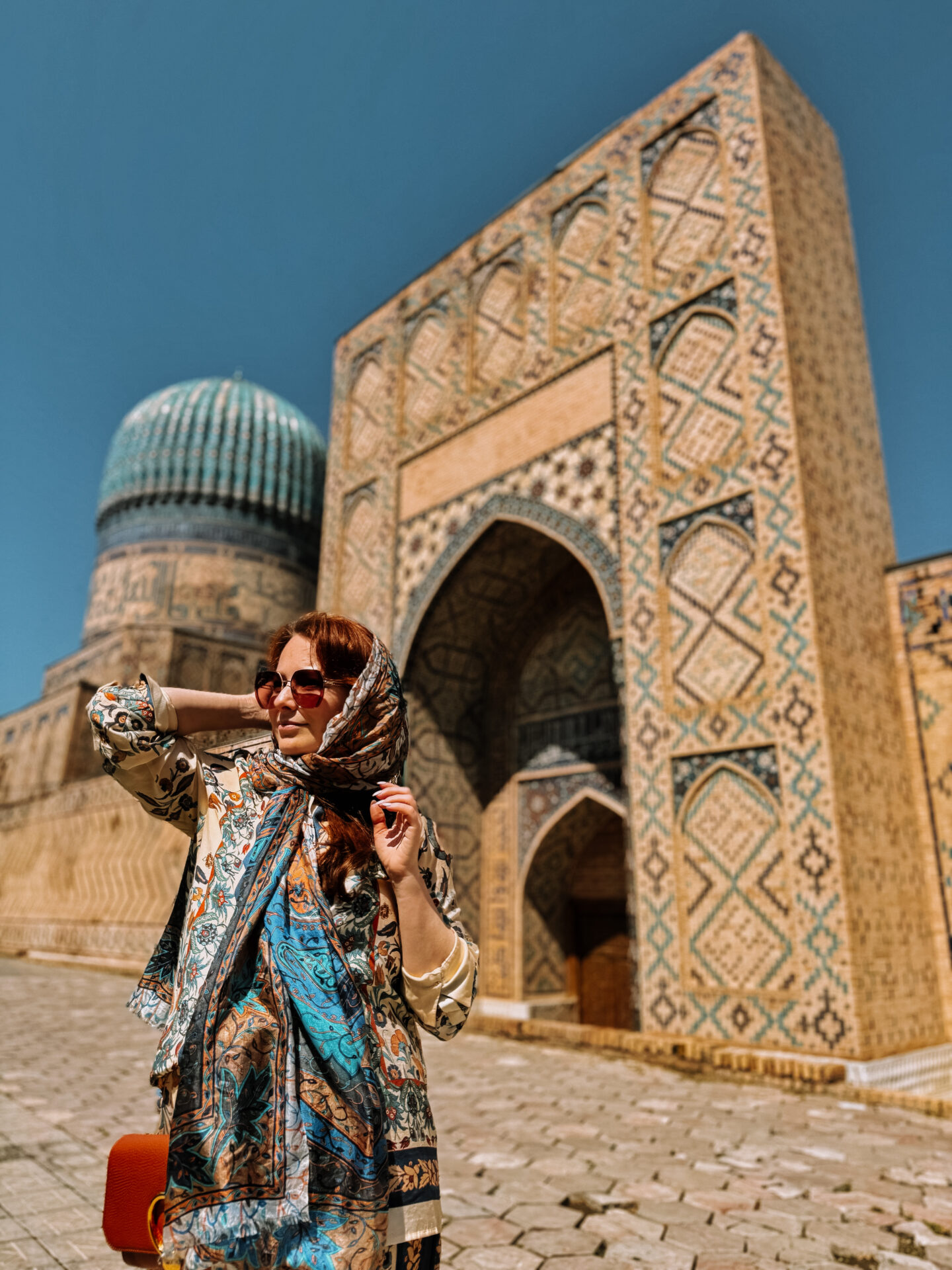
The Bibi-Khanym Mosque should not be missed either. It is one of the largest mosques ever built in the Islamic world and the scale of it, even in its partially restored state, is staggering. The turquoise domes visible from across the city are one of the defining images of Samarkand.
Tips for Samarkand:
Go to the Registan and Shah-i-Zinda at opening time. The combination of low light and very few people is impossible to replicate later in the day. For the Registan light show, ask at the ticket booth when you visit during the day about current show times as these can vary by season. For a meal with views of the Registan, Emirhan Restaurant has a rooftop terrace that looks directly over the square. It is on the pricier side relative to other options in the city but the setting is hard to beat. Book a table in advance if you want to be on the roof. Badr Restaurant is another well-regarded option in the city. Boulevard Restaurant and Bakery is a good choice if you want something more relaxed, particularly for breakfast or a lighter meal. For accommodation, the Zarafshon Parkside Hotel is a solid base in a good location, well-reviewed for comfort and service.
Best Time to Visit Uzbekistan
Uzbekistan has a continental climate with real extremes at both ends, so timing matters more here than in most destinations.
Spring, from late March to early June, and autumn, from September to late October, are the sweet spots. Temperatures sit comfortably between 20 and 30 degrees Celsius, the light is good for photography, and the cities are lively without being overwhelming. Spring brings the added bonus of the landscape coming back to life after winter, with markets filling up with fresh produce. If you are visiting in late March, Navruz, the Persian New Year celebrated on 21 March, is worth experiencing. It is one of the most important cultural events of the year, with music, communal feasts, and celebrations in every city.
Summer, July and August in particular, is genuinely hot. Temperatures in Bukhara and Khiva regularly exceed 40 degrees Celsius, which makes long days of walking through open-air monuments uncomfortable at best. It is doable if you structure your days around early mornings and evenings, but it requires more discipline than most people expect.
Winter is cold, sometimes well below freezing in the north, and a number of guesthouses and smaller restaurants close for the season. That said, the historic cities are at their quietest and most atmospheric in winter, and if you do not mind dressing for the cold, places like Khiva under a dusting of snow are genuinely extraordinary.
My personal recommendation is April. The temperatures are warm without being overwhelming, the landscape is coming back to life after winter, and the spring light on the tilework is genuinely beautiful. It sits right in the sweet spot before the summer heat arrives and before the main tourist peak, so the cities feel lively but not crowded.
Where to Stay:
Hotel Recommendations
Accommodation in Uzbekistan ranges from simple family-run guesthouses to restored historic buildings that are genuinely worth staying in as part of the experience.
In Tashkent, the Wyndham Hotel is a solid choice, well-located and consistently reliable for a comfortable first night before heading west.
In Khiva, staying inside the walls of Itchan Kala is the single best decision you can make. Annex Hotel Khiva is a well-regarded option inside the walls, and there are also various smaller family-run guesthouses at different price points, most of them in traditional buildings.
In Bukhara, Komil Boutique Hotel is one of the most consistently recommended places in the city. It is a restored traditional house built around a courtyard, with the kind of atmosphere that makes you want to spend time at the hotel rather than just sleep there.
In Samarkand, the Zarafshon Parkside Hotel offers a good balance of comfort, location, and service. Well-reviewed and well-placed for the main sights.
Food: What to Eat and Where
Food was one of the consistent highlights of the trip, and each city has its own regional character worth paying attention to.
Plov is the dish you will eat most often and the one that varies the most between cities. In Tashkent it tends to be richer and fattier, cooked in cotton seed oil with a generous amount of lamb or beef. In Samarkand it is layered differently, with yellow carrots and a lighter flax seed oil that gives it a cleaner taste. It is made with lamb, beef, or chicken but never pork. Try it in multiple cities and you will start to notice the differences. Besh Qozon is the most famous plov restaurant in Tashkent, where the dish is prepared in enormous traditional kazan pots right in front of you. It is the right place to start before you begin comparing versions across cities.
Samsa, the baked pastry filled with spiced meat or vegetables and pulled straight from a tandoor, works as a snack at any point in the day and costs almost nothing. Shashlik, grilled skewered meat cooked over charcoal, is everywhere and consistently good. Manti are steamed dumplings that appear in different forms across the country. Lagman, a hand-pulled noodle dish in a rich broth, is one of the most satisfying things to eat after a long day of walking. Chuchvara is a smaller, more delicate version of manti, usually served in a light soup.
The bread deserves a mention on its own. Non, the round flatbread baked in a tandoor oven, comes out with a crispy base and a soft centre and is served with everything. It is one of those things you eat every day almost without noticing, and then miss immediately when you leave.
Alcohol is available and widely served in most restaurants and hotels. Local wine exists and ranges from acceptable to surprisingly decent. Local beer is fine. Nobody makes a fuss either way, and you never feel any pressure around it.
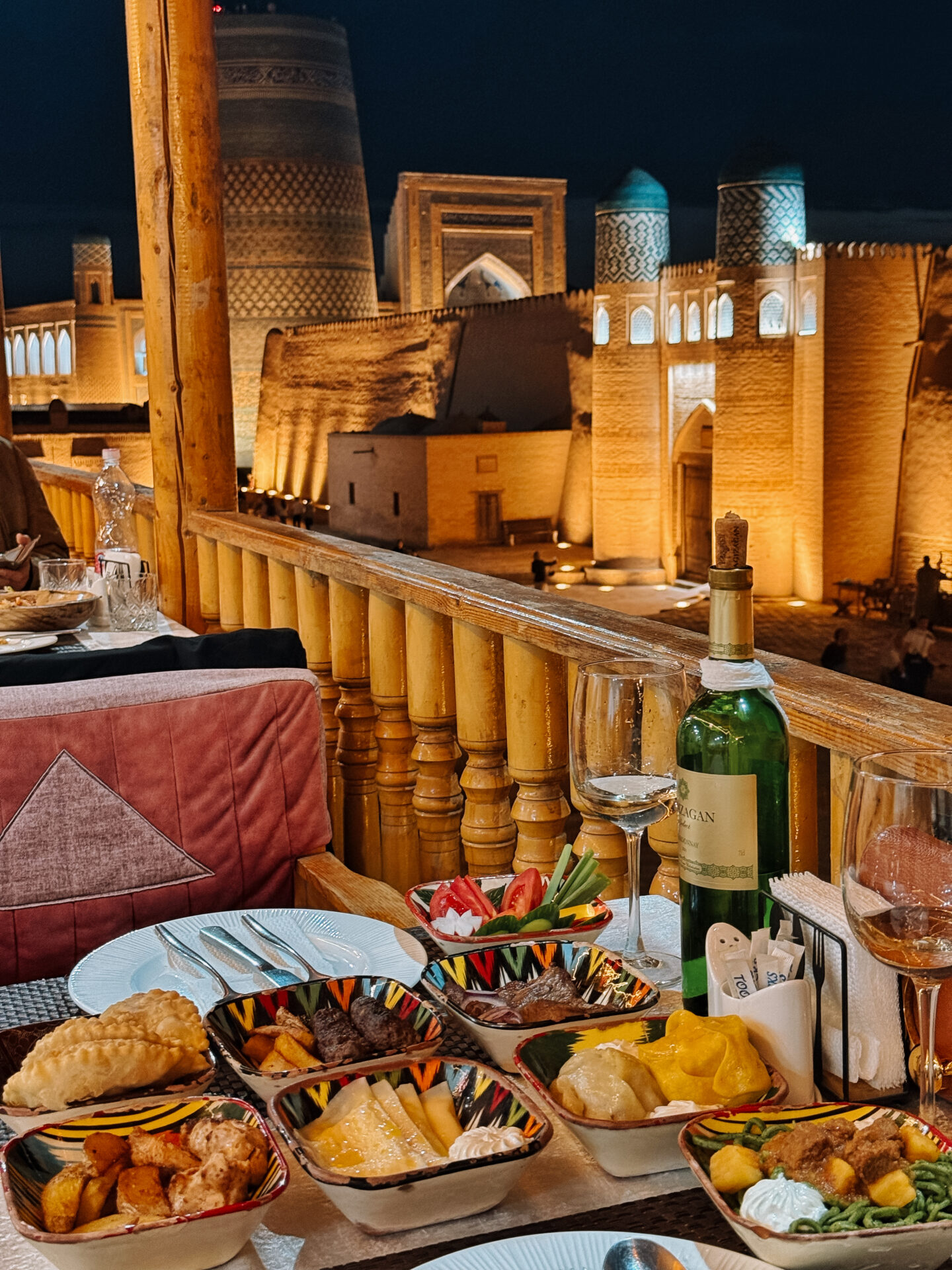
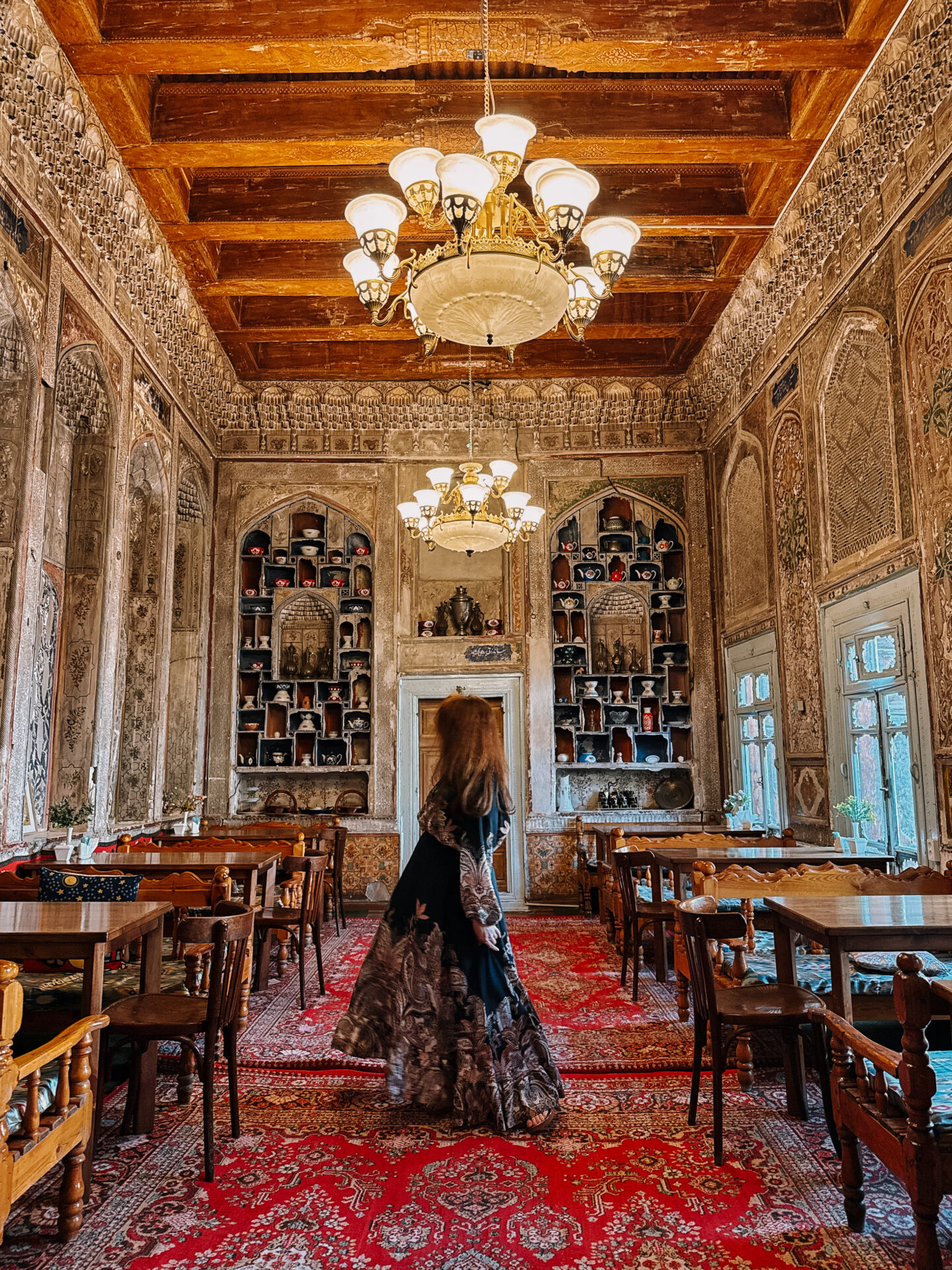
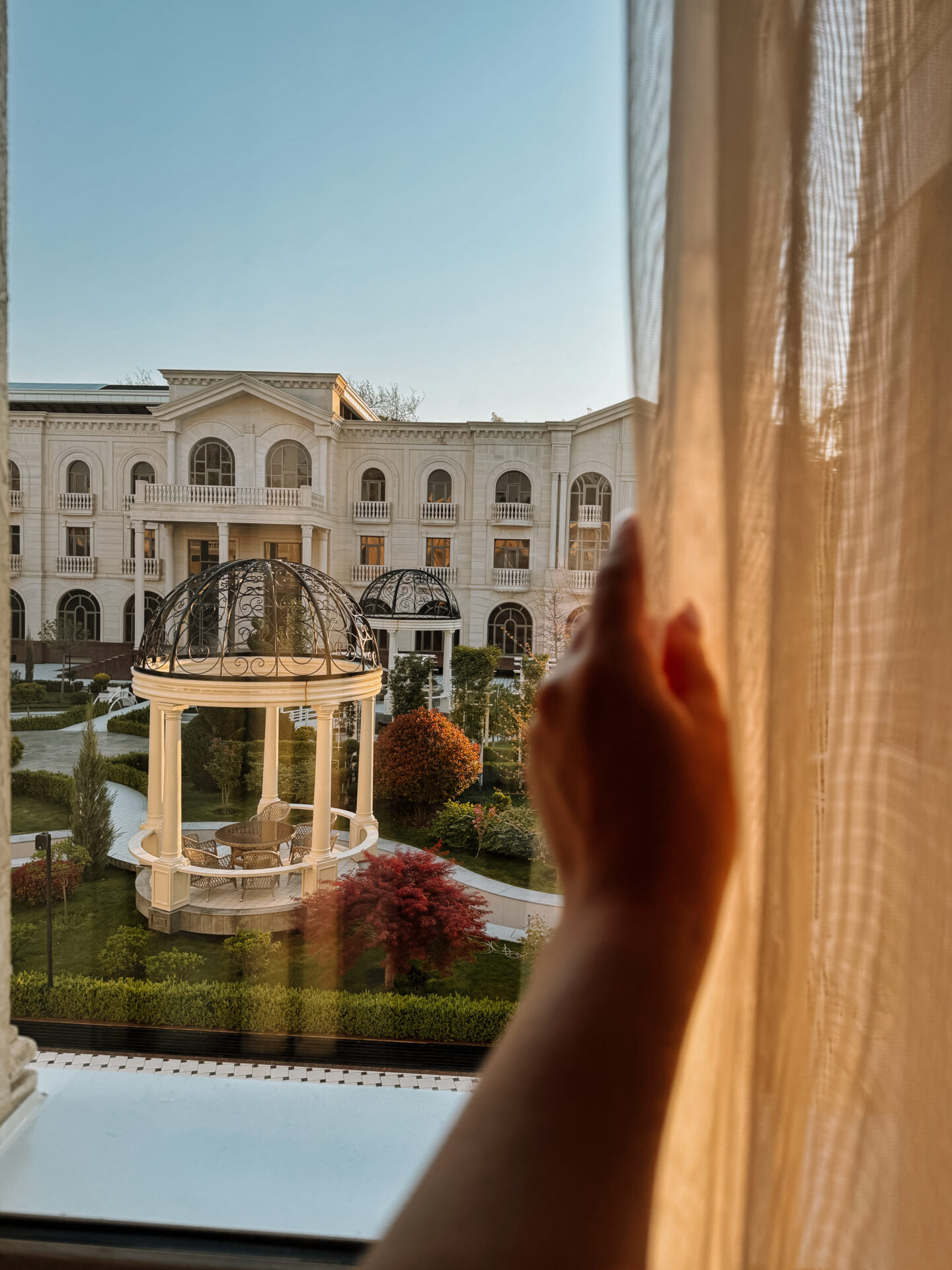
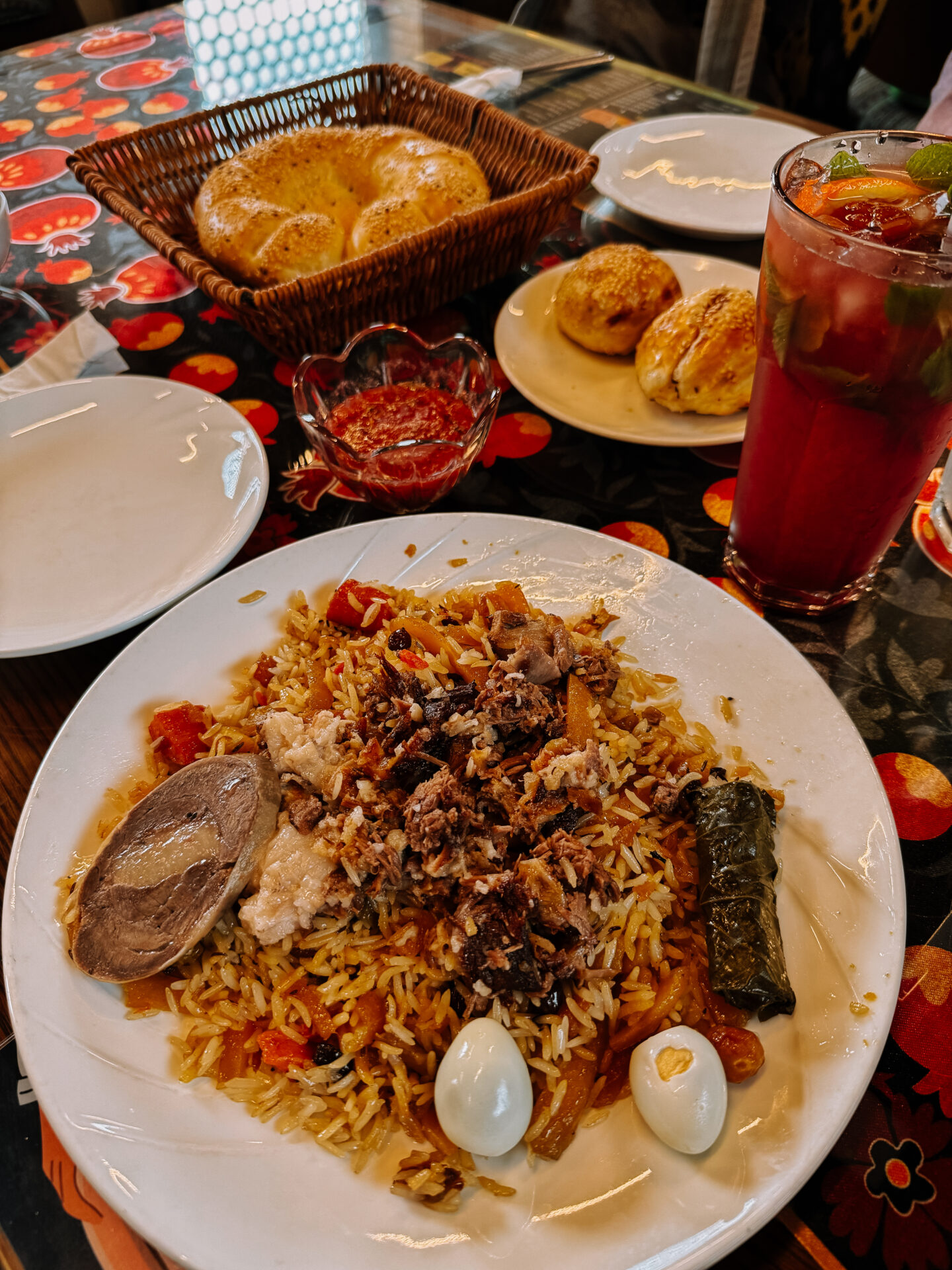
A full list of restaurants worth knowing about, city by city:
Tashkent
- Plov Center for the definitive Tashkent plov experience in a no-frills local setting
- Afsona for modern Uzbek cuisine in a more relaxed, contemporary atmosphere, good for an evening out
Khiva
- The Terrace for views and solid cooking inside the walls
- Café Zarafshon as a reliable spot inside the old city
- Tandoriy right outside the city walls for traditional dishes that go beyond the standard menu, a more interesting option than most places in the city
Bukhara
- The restaurant at Lyabi Hauz for the atmosphere and setting on the water in the evening
- The Café inside the Kalon Pavilion for drinks, sweets, and the view over the Poi Kalon complex
- Ayvan for a proper meal in a courtyard setting in the old town
Samarkand
- Emirhan Restaurant for the rooftop views directly over the Registan, best booked in advance
- Badr Restaurant for a well-regarded meal in the city
- Boulevard Restaurant & Bakery for a relaxed breakfast or lighter option
Getting Around and Practical Notes
Taxis are very cheap by European standards but it is worth using apps rather than flagging down cars or agreeing to a price at the airport. We had a driver try to overcharge at Tashkent airport and another one successfully overcharged us at Urgench airport on the way to Khiva. Use Yandex Go everywhere, and Uklon in Tashkent where it tends to be slightly cheaper. Both apps work well and eliminate most of the negotiation.
Domestic flights are cheap, comfortable, and often make far more sense than the train for the longer distances. We originally booked the train from Khiva to Bukhara, which takes over six hours, and switched to a flight instead. It was the right call. For Tashkent to Samarkand or Bukhara to Tashkent the high speed train is excellent and worth booking, but get tickets well in advance as they sell out.
Cash is essential. ATMs exist in the major cities but card acceptance outside hotels is inconsistent. Stock up before heading to Khiva or the Aral Sea.
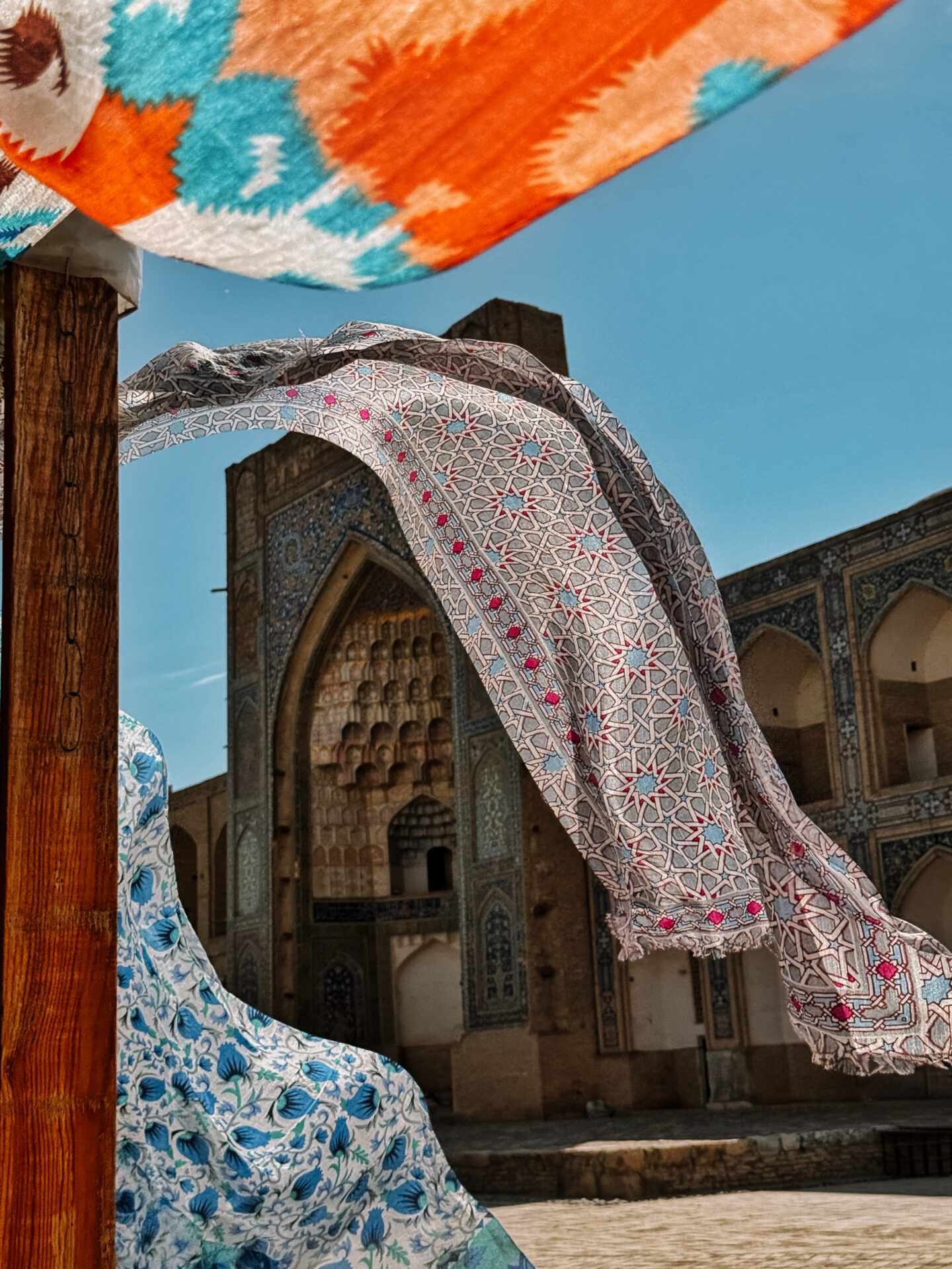
If you are buying souvenirs, buy something made from silk. Uzbekistan has a long silk-weaving tradition and the quality is genuinely good. The ikat-dyed fabric with its distinctive blurred patterns is the most recognisable, and it appears on everything from scarves to wall hangings. It is one of the few things worth spending real money on.
The people deserve a mention. Uzbekistan was one of the friendliest countries I have visited, and the friendliness felt genuine rather than transactional. Nobody was pushing anything at the bazaars. Nobody was screaming prices at you. Men were friendly and respectful without any of the undercurrent that can exist in other Muslim-majority countries, and I felt completely safe and comfortable throughout the trip. Most people speak Russian as a first or second language. In hotels and restaurants, English is usually available. The general atmosphere, everywhere we went, was calm, welcoming, and genuinely pleasant to be around.
Final Thoughts
Uzbekistan is a trip that keeps giving you things to think about long after you are back. The Silk Road cities deliver everything they promise, and the architecture alone justifies the journey. But the parts that stayed with me most were the ones that could not have been anticipated from the photos: the stillness of Khiva at midnight, the drive across what used to be a seabed, the ease of moving through a country where people are simply glad you came. It is a destination that rewards slowing down, going at the right hours, and occasionally ignoring the obvious route in favour of a quieter street. If you have been thinking about it for years the way I was, go. It is worth it.
If you enjoyed this, you might also like my other travel guides across Asia.